
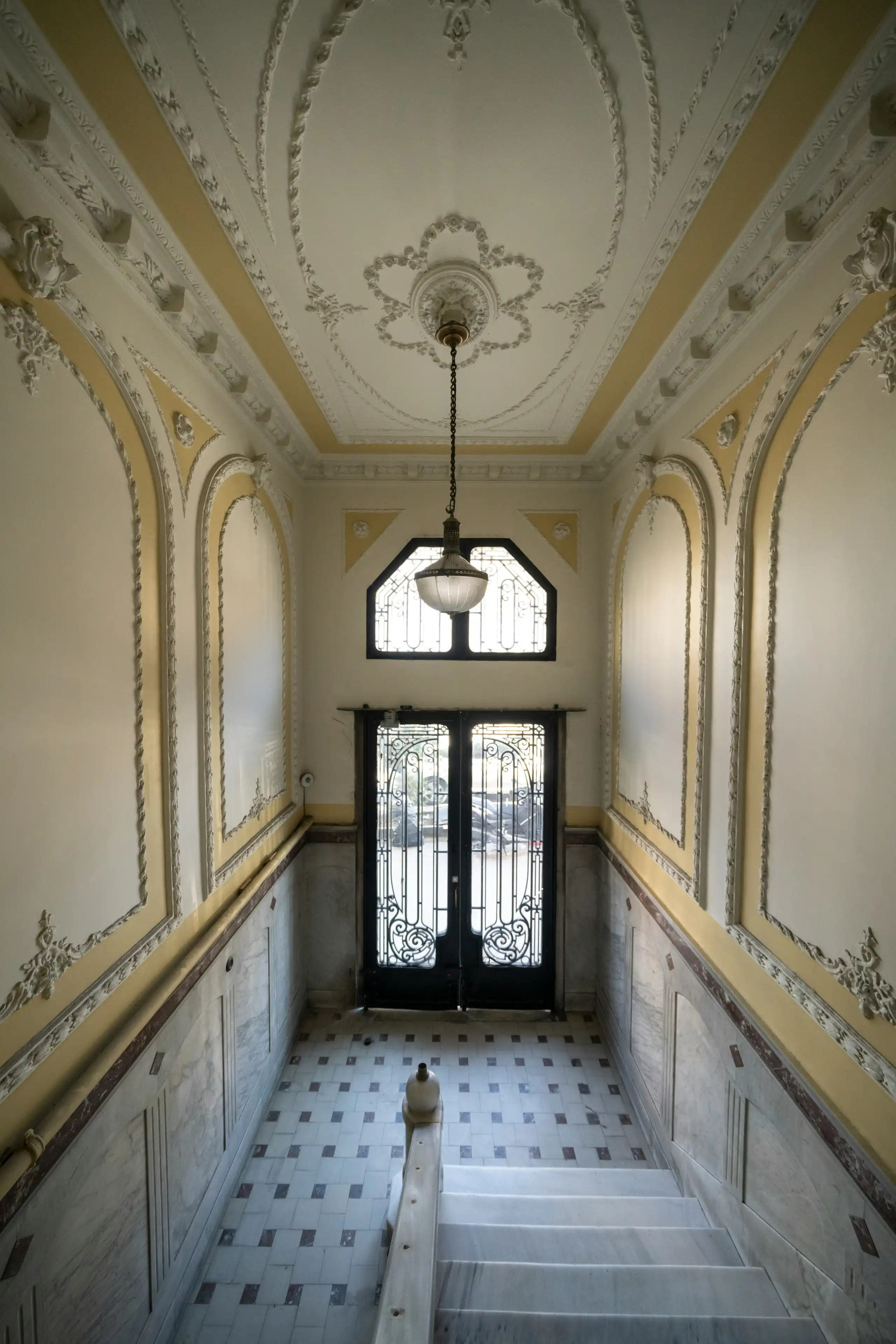
Walk down the right block in Hudson County and it can feel like stepping into another era.
Brownstone facades, ornate cornices, original stoops, rowhouses, and streets laid out generations ago sit just minutes from some of the newest residential towers in New Jersey.
Around Halloween, these homes might look like the perfect setting for a ghost story. But the numbers tell an even more interesting story: Hudson County has one of the older housing stocks in New Jersey, with nearly 30% of its housing units dating to 1939 or earlier.
Nearly 1 in 3 Hudson County Housing Units Dates to 1939 or Earlier
According to the U.S. Census Bureau’s 2020–2024 American Community Survey, Hudson County has approximately 320,959 housing units.
Of those, approximately 95,293 were built in 1939 or earlier, representing about 29.7% of the county’s housing stock.
That means nearly 1 in every 3 housing units across Hudson County dates to 1939 or earlier.
For comparison, approximately 17.4% of housing units statewide were built in 1939 or earlier. Hudson County’s share is substantially higher, even after decades of new development along the waterfront and in communities like Jersey City, Harrison, Hoboken, and Weehawken.
It’s also worth noting that Census figures refer to housing units, not individual buildings. A single multifamily building can contain multiple housing units.
Jersey City: Historic Meets New Construction
Few places illustrate Hudson County’s architectural contrast better than Jersey City.
According to the same 2020–2024 ACS estimates, Jersey City has approximately 135,231 housing units, and roughly 29.2% were built in 1939 or earlier. The median year of construction for the city’s housing stock is approximately 1971.
But those numbers look very different depending on where you are.
Downtown includes entire neighborhoods known for 19th-century rowhouses and brownstones, while areas closer to the waterfront contain large concentrations of much newer residential construction.
Jersey City currently recognizes five local historic districts: Hamilton Park, Harsimus Cove, Paulus Hook, Van Vorst Park, and West Bergen-East Lincoln Park. The city also recognizes individual local landmarks.
Hamilton Park, Paulus Hook, and Van Vorst Park received local historic-district designations in 1977, while Harsimus Cove followed in 1983. West Bergen-East Lincoln Park was designated in 2015.
The history goes back much further. Jersey City’s preservation guidelines describe Downtown’s development around Paulus Hook, Hamilton Park, and Van Vorst Park during the mid-19th century. The city’s preservation records also document individual Greek Revival rowhouses dating to the 19th century, including examples from approximately 1855 and 1860.
So that brownstone you pass every morning really could have been standing for more than 160 years.
Hoboken’s Older Homes Are Part of Its Identity
Hoboken may be constantly evolving, but much of its residential character comes from an earlier era.
The latest ACS estimates count approximately 30,259 housing units in Hoboken, with approximately 9,744 built in 1939 or earlier.
That works out to roughly 32.2% of the city’s housing stock, or nearly one-third. More than half of Hoboken’s housing units, approximately 51.8%, were built before 1980.
Those numbers help explain why old and new coexist so visibly throughout the city. Historic rowhouses and walk-ups can sit only blocks away from converted industrial buildings and modern residential developments.
Hoboken also maintains a Historic Preservation Commission that reviews certain exterior alterations, renovations, additions, and other work affecting properties within locally designated historic districts and landmarks.
Historic Doesn’t Automatically Mean “Historic District”
Here is an important distinction for buyers.
A home can be old without being located in a designated historic district, and a property can be located within a historic district without every component of the home being original.
In Jersey City, for example, properties within locally designated historic districts can be subject to additional preservation review. The city’s Historic Preservation Commission oversees certain development and alterations affecting protected historic resources.
That means buyers considering an older home should look beyond the construction date.
Ask:
Is the property within a historic district?
Is the property individually designated as a landmark?
Are there restrictions affecting exterior renovations?
Which architectural elements are original?
What major systems have already been replaced or updated?
The age of the home is only the beginning of the story.
What Buyers Should Look for in an Older Hudson County Home
Historic character can be a major selling point, but an older property deserves a closer look.
Before buying, pay particular attention to:
Electrical: Has the system been modernized?
Plumbing: Are supply and waste lines original or updated?
Roof: When was it last replaced or repaired?
Windows: Are they original, restored, or replaced?
Foundation and masonry: Look for signs of movement, moisture, or deterioration.
Heating and cooling: Older homes may have systems that have been upgraded at very different times.
Historic restrictions: Understand what can and cannot be changed before planning renovations.
A beautiful facade or original fireplace can add tremendous character, but the condition of the systems behind the walls matters just as much.
Old Homes, New Hudson County
Perhaps the most interesting thing about Hudson County is that its housing market is not simply old or new. It’s both.
You can find 19th-century rowhouses, prewar apartment buildings, converted warehouses, mid-century properties, and brand-new luxury towers within a relatively small geographic area.
That contrast is part of what gives communities like Hoboken and Jersey City their distinctive character.
So, haunted? Probably not.
Historic? The numbers say there’s a very good chance.
If you’re considering buying or selling an older home in Hudson County, understanding its history, condition, location, and potential restrictions can be just as important as understanding its square footage.
Sources
U.S. Census Bureau, American Community Survey
2020–2024 ACS 5-Year Estimates, Table B25034, Year Structure Built. The Census Bureau reports year-built categories including “1939 or earlier” and defines the table’s universe as housing units.
Hudson County housing figures
2020–2024 ACS estimates: 320,959 total housing units; 95,293 built in 1939 or earlier, or approximately 29.7%.
New Jersey housing figures
2020–2024 ACS estimates: approximately 3.79 million total housing units; approximately 658,000 built in 1939 or earlier, or approximately 17.4%.
Jersey City housing figures
2020–2024 ACS estimates: approximately 135,231 housing units; approximately 29.2% built in 1939 or earlier; median year built approximately 1971.
City of Jersey City, Historic Preservation
Current local historic districts, landmarks, Historic Preservation Commission jurisdiction, and preservation requirements.
City of Jersey City, Historic Preservation Plan and Guidelines
Historic-district designation dates, Downtown development history, and examples of documented 19th-century rowhouses.
City of Hoboken, Historic Preservation Commission
Information on Hoboken’s Historic Preservation Commission and its review authority.
Note: Census figures describe housing units rather than individual buildings, so they should not be interpreted as the number of older structures in each community.
Social Cookies
Social Cookies are used to enable you to share pages and content you find interesting throughout the website through third-party social networking or other websites (including, potentially for advertising purposes related to social networking).